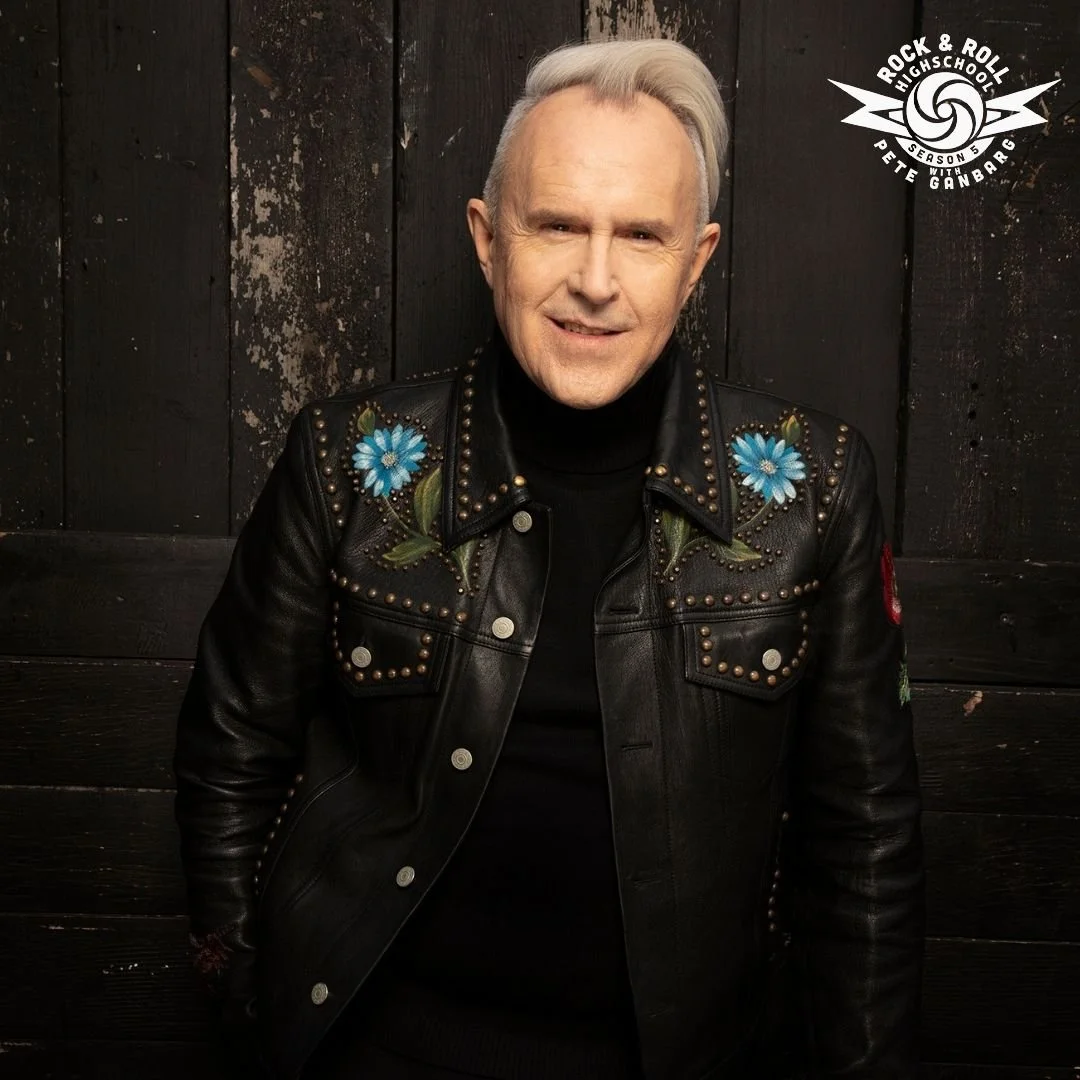
About this episode
Howard Jones helped define the sound of the 1980s by proving that synthesizers could be every bit as expressive and emotionally resonant as guitars or pianos.

Classically trained as a pianist before embracing the emerging world of electronic music, Howard exploded onto the international stage with a remarkable string of hit singles, including "New Song," "What Is Love?," "Things Can Only Get Better," "Like to Get to Know You Well," and the U.S. Top 10 smash "No One Is to Blame." His first two albums, Human's Lib and Dream Into Action, established him as one of the defining artists of the MTV era, blending infectious melodies with thoughtful lyrics shaped in part by his lifelong Buddhist practice.

Howard's influence extended well beyond the charts. In 1985, he joined fellow keyboard innovators Stevie Wonder, Herbie Hancock, and Thomas Dolby for a memorable synthesizer summit at the Grammy Awards, and later that year performed at the historic Live Aid concert at Wembley Stadium, performing solo on Freddie Mercury's piano before a global audience of hundreds of millions. More than four decades later, he continues to record new music and tour internationally, bringing his timeless songs to audiences around the world.

In this conversation, Howard reflects on his classical training, the birth of synth-pop, his longtime onstage collaboraor, mime artist Jed Hoile, the stories behind his biggest hits, his Buddhist philosophy, and the role technology has played throughout his remarkable career. We also discuss songwriting, live performance, and why maintaining a sense of curiosity and optimism has remained at the heart of both his music and his life.

Thoughtful, innovative, and endlessly creative, Howard Jones continues to demonstrate that great songs—and great ideas—stand the test of time.